
Best Progressive Jackpot Pokies: Full Guide for Kiwis


















Progressive Pokies Explained: What Makes Them “Progressive”
A standard slot pays from a fixed paytable — the top prize never changes. Progressive pokies work differently: a small portion of every wager feeds a shared pool, which keeps climbing until one player triggers it. That’s the defining feature separating them from fixed jackpots.
Once hit, the pool drops back to a preset minimum called the seed value and begins climbing again. This reset-and-rebuild cycle is what makes progressive jackpots their own category.
How Progressive Jackpots Work
Every bet contributes a small percentage to the pool. The more players across the network, the faster the jackpot grows. Here’s how the cycle works:
- Bet — a player places a stake on the game;
- Contribution — a small portion of that bet feeds the jackpot pool automatically;
- Pool grows — every qualifying bet across all connected multiple casinos adds to the same pot;
- Trigger — a random event or bonus feature activates the jackpot opportunity;
- Payout — the jackpot is awarded to the qualifying player;
- Jackpot resets to seed — the pool drops back to its preset minimum, and the cycle begins again.
The jackpot always restarts from a minimum amount — called the seed — so there’s always something in the pot after a win. From there, it climbs with every bet placed across the network until the trigger hits. Wide-area progressive pokies linked across multiple casinos can build to enormous sums far quicker than any single-site game for this reason.
Types of Progressive Networks
Standalone progressive jackpots are confined to one machine or casino. Pools build slowly, and prizes are modest, but the competition pool is also limited.
A local progressive links machines within one platform. Pool sizes are mid-range, with competition limited to that venue.
Wide area progressive jackpots connect games across many casinos simultaneously — this is where the multi-million figures come from. For example, Mega Moolah runs on a network spanning hundreds of casinos, which is why its pools can reach eight figures and why it attracts more players than other jackpot pokies. The main trade-off is competing with a far larger player base, though.
Top 5 Progressive Jackpot Pokies
Now that you know how the networks work, here are five progressive jackpot pokies that consistently appear at international online casinos available to NZ players.
Mega Moolah
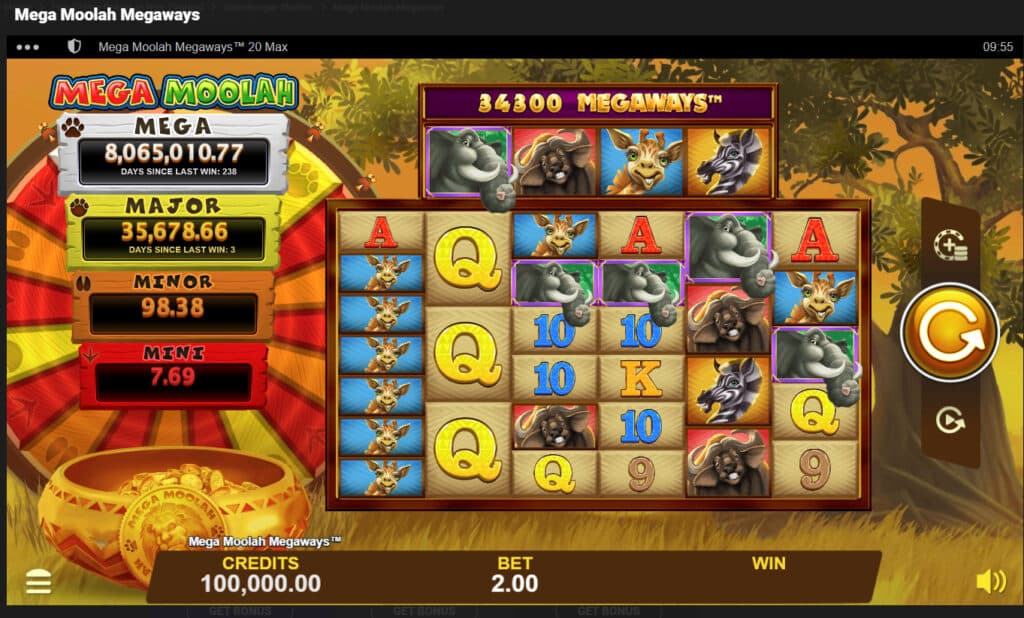
Developed by Microgaming (distributed via Games Global), Mega Moolah is the benchmark for wide-area progressive jackpot games. It runs an African safari theme with four jackpot tiers — Mini, Minor, Major, and Mega — the last of which has produced some of the largest recorded online jackpot pokies payouts in history.
The jackpot feature triggers randomly via a wheel bonus, meaning any spin can activate it regardless of the reel outcome (with higher bets giving better odds of triggering the feature). Its record-breaking history and global player base make it a recurring item on the best progressive jackpot pokies lists.

WowPot!

Microgaming’s WowPot! is a follow-up wide-area network, built to reach higher peaks than classic Mega Moolah before hitting. It uses the same four-tier, wheel-based structure, with several titles — including Sisters of Oz and Poseidon Ancient Fortunes — feeding the same shared pool from different base game experiences. For players browsing the best online pokies with genuinely large win potential, WowPot! progressive pokies are worth placing on your shortlist.
Age of the Gods 2
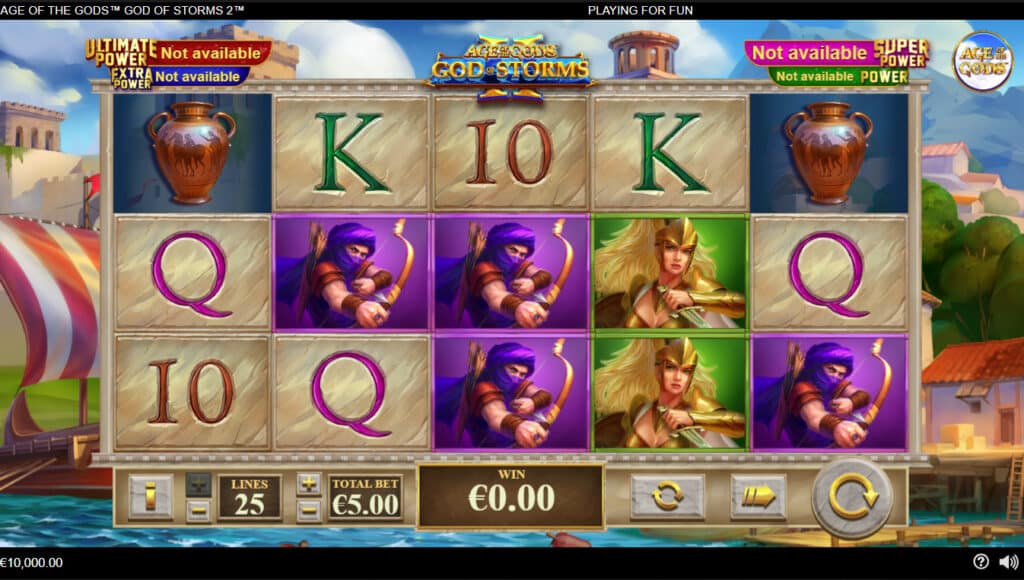
Developed by Playtech, Age of the Gods is the flagship of a wide network built around Greek mythology. The series spans multiple titles — including Age of the Gods 2 and several spin-offs — all feeding the same shared pool, which accumulates quickly across the entire suite. The jackpot feature activates randomly and leads to a pick-style bonus with four tiers: Power, Extra Power, Super Power, and Ultimate Power. It’s one of the most recognisable progressive jackpots in the Playtech catalogue and widely available to NZ players.

Mega Fortune
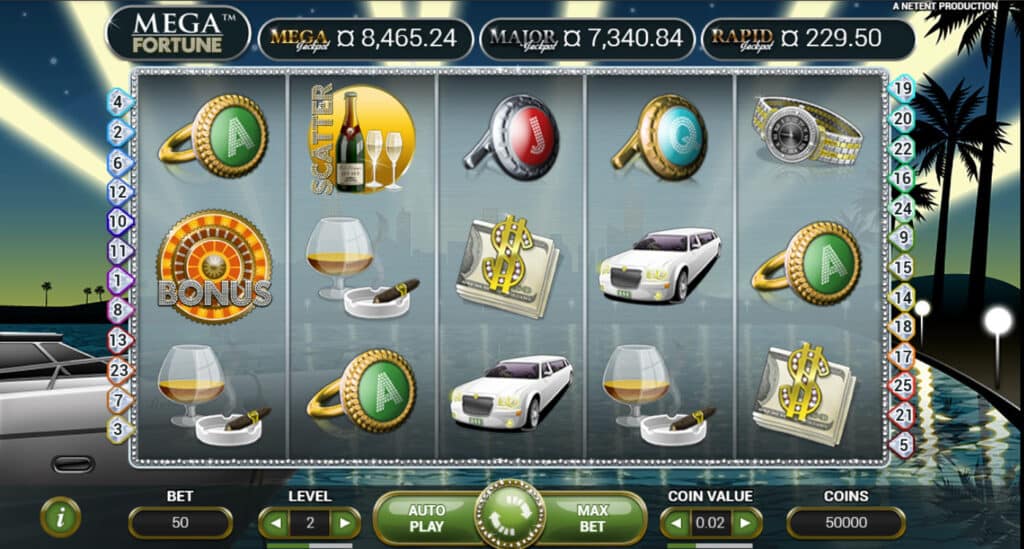
NetEnt’s Mega Fortune is a luxury-themed progressive jackpot pokie — yachts, champagne, high-end watches — running a three-tier structure (Rapid, Major, Mega). The bonus is triggered by landing three bonus symbols, then leads through a wheel-spinning sequence to reach the central Mega prize. It is one of the best jackpot pokies in the NetEnt catalogue.
Here, it is important not to confuse NetEnt’s progressive classic with a fixed-win Mega Fortune release from Stakelogic — though an attention-worthy fruit-themed classic, it does not have the same potential for huge wins.
Divine Fortune
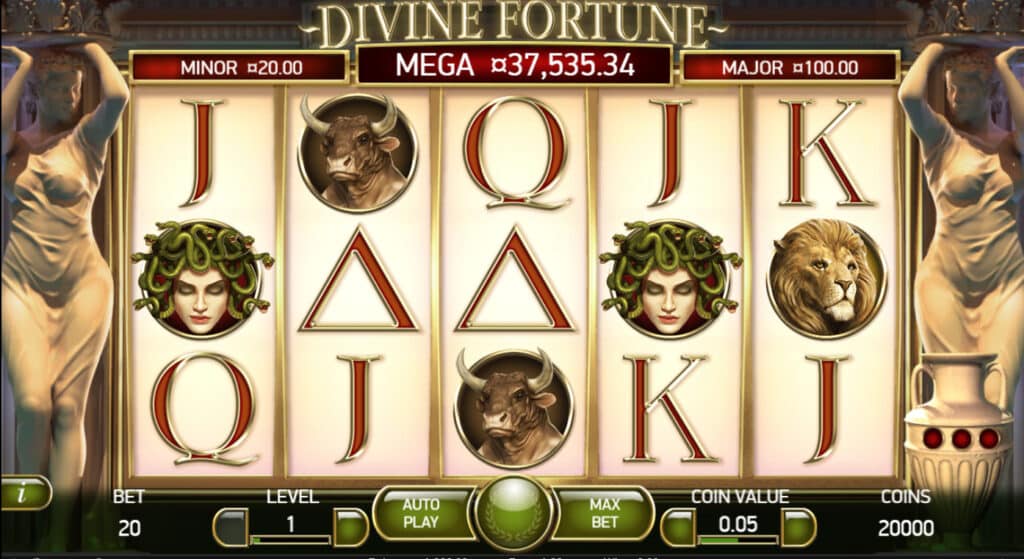
Also from NetEnt, Divine Fortune takes a Greek mythology theme with a local rather than wide-area structure — three tiers (Minor, Major, Mega) that hit more frequently than multi-million-dollar networks. The jackpot triggers via a wheel bonus, and the game also offers free spins with expanding wilds in the base game. So, it suits players who want progressive pokies with more manageable bankroll requirements perfectly.

Progressive Jackpots: Key Terms, Tiers, and Eligibility Rules
Before playing any progressive jackpots, it pays to understand what the screen is telling you.
- Mini / Minor / Major / Mega — tier names used by many games. Mini hits most often for the smallest prize; Mega hits least for the largest. Not every game uses all four tiers.
- Jackpot meter — the live counter showing the current pool value, updating in real time on wide-area networks.
- Jackpot feature — the bonus event that gives a chance at the jackpot. Reaching it doesn’t guarantee a win — it gives a probability-weighted shot at each tier.
- Random trigger — the jackpot feature fires on any spin, independent of reel outcome. Other games require a specific symbol combination or bonus entry.
- Must-drop / must-pay-by — a mechanic guaranteeing the jackpot hits before a set threshold. Always disclosed in the game rules if present.
- Max bet to qualify — some games require a maximum stake for top-tier eligibility; others allow any bet. This varies per title and is one of the most important rules to check before playing jackpot pokies.
Notably, game rules vary somewhat depending on the site you’re using. So, before you try any new online pokies or revisit an old favourite, always open the in-game Help or Rules panel to confirm what applies to that specific game.
Tiers and Triggers in Progressive Pokies
Triggers fall into two categories: random and feature-dependent.
A random trigger fires regardless of the reel result. Mega Moolah uses this model — the wheel bonus activates on any spin, with probability generally weighted by stake size.
A feature-dependent trigger requires a specific condition: landing symbols, entering a bonus round, or placing a qualifying side bet. Age of the Gods uses a random trigger but resolves the jackpot through a pick-em bonus once activated.
In practice, triggers look like: a wheel spin sequence (Mega Moolah, WowPot!), a pick-from-grid bonus (Age of the Gods), or jackpot symbols landing across the reels. What’s less obvious is that some games only make the top tier available at maximum stake — others let any bet size qualify for all tiers. There’s no universal rule, so check the eligibility conditions in the in-game rules before your session.
How to Evaluate Progressive Jackpot Pokies Before You Play
Not all progressive pokies suit every player. Key things to consider before committing real money:
- Volatility — progressive jackpot slots are high variance. The jackpot component takes a share of the theoretical return, and most sessions won’t produce one. Size your bankroll for extended play without large hits.
- RTP — the published RTP on many progressive pokies includes the jackpot contribution, so the base game return is lower than the headline figure. Check whether the listed RTP is base-only or includes the major win.
- Bankroll fit and max bet — if top-tier eligibility requires maximum stake, calculate if that’s sustainable for your session. Using free pokies demos first is a practical way to gauge game pace before playing for real.
- Jackpot “overdue” myths — a long-unhit jackpot is not statistically due. Each spin is independent. A large pool is appealing, but doesn’t change per-spin probability.
- Provider reputation — established families like the Microgaming WowPot! network, Playtech’s Age of the Gods suite, and NetEnt’s Mega Fortune and Divine Fortune progressive jackpots operate on audited networks with verifiable track records.
Keep in mind that no single pokie can tick every box — the right choice comes down to your budget and your tolerance for variance.
RTP and Volatility Reality Check for Progressive Games
The RTP on progressive jackpots includes a portion allocated to the jackpot pool — money that will only be realised by a very small number of players. The base game return is therefore lower than the headline figure, and your session hit-rate may feel leaner than on a comparable standard slot.
So, it makes sense to set a stake size with a session budget and stick to both. Don’t increase stakes to chase losses — doing so raises costs without changing win probability. The jackpot is low-probability upside, not an expected return from progressive jackpot games, no matter how established the providers.
Bonus Terms and Jackpot Exclusions to Watch
Casino bonuses and progressive pokies require careful handling. Some welcome bonuses and free spins offers exclude jackpot games from wagering contribution entirely, or count play at a reduced rate.
Other bonuses may cap maximum bet below the level needed to qualify for top-tier progressive jackpots. This means you are ineligible for the main prize while playing with bonus funds.
So, read the T&Cs before activating any bonus on jackpot pokies. It also makes sense to check the in-game Help or Paytable panel to confirm the game’s own eligibility rules. Most importantly, even if the game is eligible for bonus play, remember to gamble responsibly.
Pros & Cons of Playing Progressive Slots Online
Progressive jackpot slots offer something no standard slot can — but the format comes with real trade-offs worth understanding before you play.
- No fixed prize ceiling. Progressive jackpots can reach astonishing figures; wide-area networks have produced payouts in the tens of millions.
- Wide game variety. You’ll find themes spanning mythology, adventure, luxury, and more — all with distinct base game experiences feeding active pools across different developer networks.
- NZD accessibility. Most major progressive jackpot pokies are available at NZ-friendly online casinos with NZD balance display, no currency conversion required, and standard deposit and withdrawal options familiar to Kiwi players.
- Lower base game return. The jackpot contribution reduces what the base game returns per session. Most pokies pay back less in regular play than equivalent non-jackpot slots.
- Max bet costs. If top-tier eligibility requires maximum stake, session budgets stretch quickly. Playing below the threshold on some jackpot pokies means contributing to a pool you can’t fully win.
- Odds not disclosed. Unlike fixed paytable prizes, the probability of triggering a jackpot is rarely published by developers. You’re playing for the most significant prize in the game, but you do not have a clear picture of the exact odds.
Knowing these trade-offs won’t change the odds, but it can mean fewer surprises — and that’s a reasonable starting point for any progressive pokies session. And if you want even fewer surprises, start with free demo versions on our site!
Progressive Jackpots FAQ for NZ Players
Most progressive pokies have a demo mode available. Playing for free means no real money contribution to the pool and no jackpot eligibility — the on-screen meter may show the live figure, but no contribution occurs. To win, real money play at the qualifying stake is required.
It depends on the game — there is no universal rule across progressive jackpot slots. Some require maximum stake for top-tier eligibility; others allow any bet size to qualify for all tiers. Check the Help or Rules panel in the specific jackpot pokies title before you play.
Both models exist. Some progressive jackpots fire on any spin regardless of reel outcome, with trigger probability often weighted by stake size. Others require a specific bonus feature or symbol combination. Some progressive pokies combine both — a random trigger leads into a bonus round that determines the prize.
Yes. The pool on progressive jackpot slots resets to its seed value immediately after a win, then begins accumulating again. On wide-area networks, the reset is visible across all connected casinos at once.
The win credits to your balance immediately, but large progressive jackpot payouts often trigger verification steps at the casino — identity checks, manual review, or staged payments. The timeline is set by the casino’s withdrawal policy, not the game. real money.
Yes. Many bonuses restrict progressive jackpot pokies by excluding them from wagering requirements. Others may allow jackpot slot games at a reduced contribution rate. So, read the full bonus T&Cs before playing.